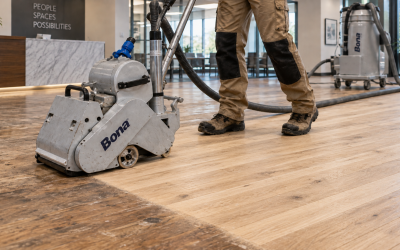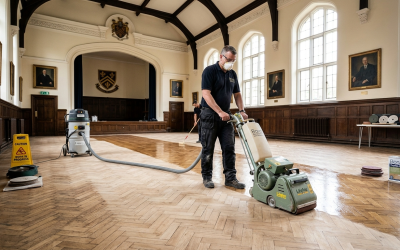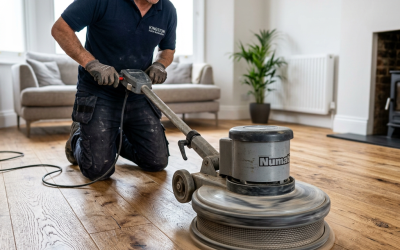
Commercial floor sanding in Kingston, KT1
In a Kingston town-centre shop, café or office, a worn timber seal is more than a cosmetic problem. Water and cleaning chemicals work into bare grain, grit cuts through the traffic lanes, and a slick entrance can become a slip concern as soon as the weather turns. We plan commercial floor sanding around your trading hours, access routes and the date the floor must return to service.
From units off Clarence Street and Eden Street to older premises near the Ancient Market Place, floors vary enormously. A Victorian conversion may hide pitch-pine boards under years of coating; a fitted showroom may have thin engineered oak that cannot take a full belt sand. Our Commercial Floor Restoration in Kingston starts with finding out what is actually underfoot.
If the boards are sound and the finish has only lost its working surface, Commercial Floor maintenance in Kingston may avoid unnecessary sanding. Where the coating needs a controlled refresh, we assess Commercial Floor Polishing in Kingston against the existing lacquer or oil system; an off-the-shelf gloss polish is seldom the answer.
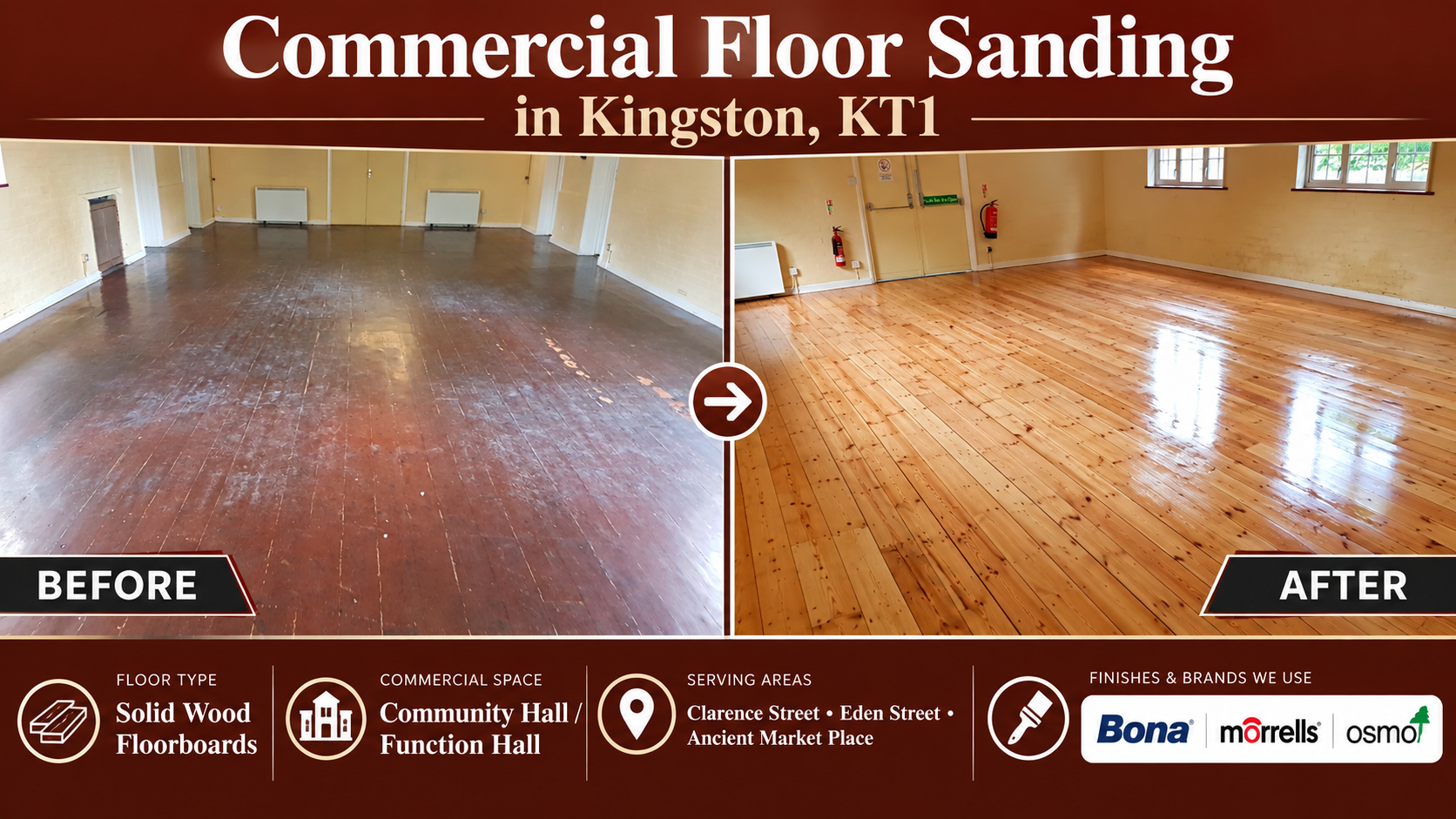
Commercial solid wood floor restoration in Kingston KT1, showing the worn dark-coated floor before sanding and the natural timber finish after professional restoration.
Sector-specific challenges and structural wear
Office chair castors, retail grit, café spillages and the constant pivoting at a gym reception all wear a finish differently. In a hotel corridor or a serviced office, the problem is often a narrow, badly worn route through an otherwise serviceable floor. Workshop trolleys and delivery-depot loads add point pressure that a domestic lacquer specification does not address.
We also work through the practical demands of clinics and dental practices, school and college halls, university rooms, and church, mosque or temple spaces: hygiene, quiet hours, safeguarding and keeping a safe route open matter as much as appearance. In Kingston Old Town conservation-area buildings and Edwardian institutional blocks, we check whether historic boards, thresholds and skirtings need a restrained repair rather than wholesale replacement.
- Open joints: dirt and wash water collect in gaps; filling a moving floor rigidly can make the repair crack out.
- Loose parquet: hollow blocks and proud edges catch cleaning equipment and create trip points.
- Worn seals: repeated alkaline or aggressive cleaning can break down a coating and leave timber difficult to sanitise.
- Slip exposure: entrances, food-service routes and damp-cleaned areas need a finish specified for their real contamination and cleaning regime.
- Moisture ingress: a damp slab, failed entrance matting or plumbing leak must be dealt with before a new coating is trapped over it.
How we restore a working timber floor
1. Subfloor audit and moisture testing
We inspect the timber species, board thickness, previous coatings, fixings and traffic pattern before choosing a sanding schedule. Quartersawn oak, pitch pine and teak behave differently under abrasives and finishes; engineered boards also have a limited wear layer. For a suspect ground floor, we take subfloor hygrometer readings and investigate the source of moisture before approving adhesive or lacquer work.
2. Timber repairs, re-bonding and resin gap-filling
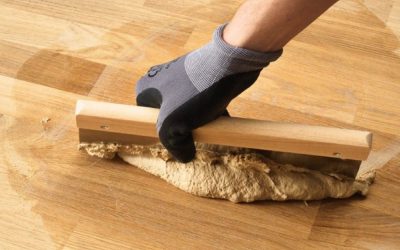
Loose blocks are lifted, the bed is cleaned and suitable parquet is re-bonded with a silane-based flexible parquet adhesive where the substrate and product data allow. We replace unsound boards with timber matched as closely as practical for species, profile and grain. Stable, narrow joints may take a resin-slurry gap fill using fine sanding dust; wide or seasonal movement gaps need a different repair, not a blanket pour of filler.
3. HEPA dust-controlled sanding and surface preparation
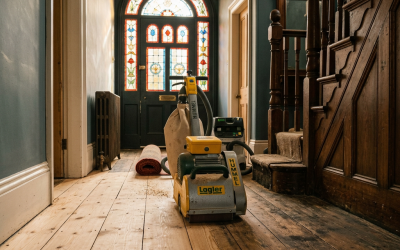
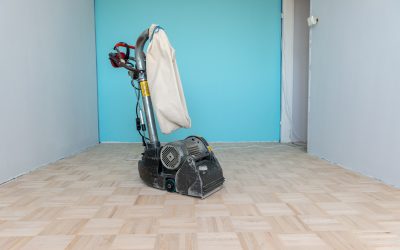
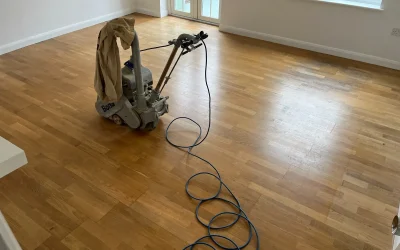
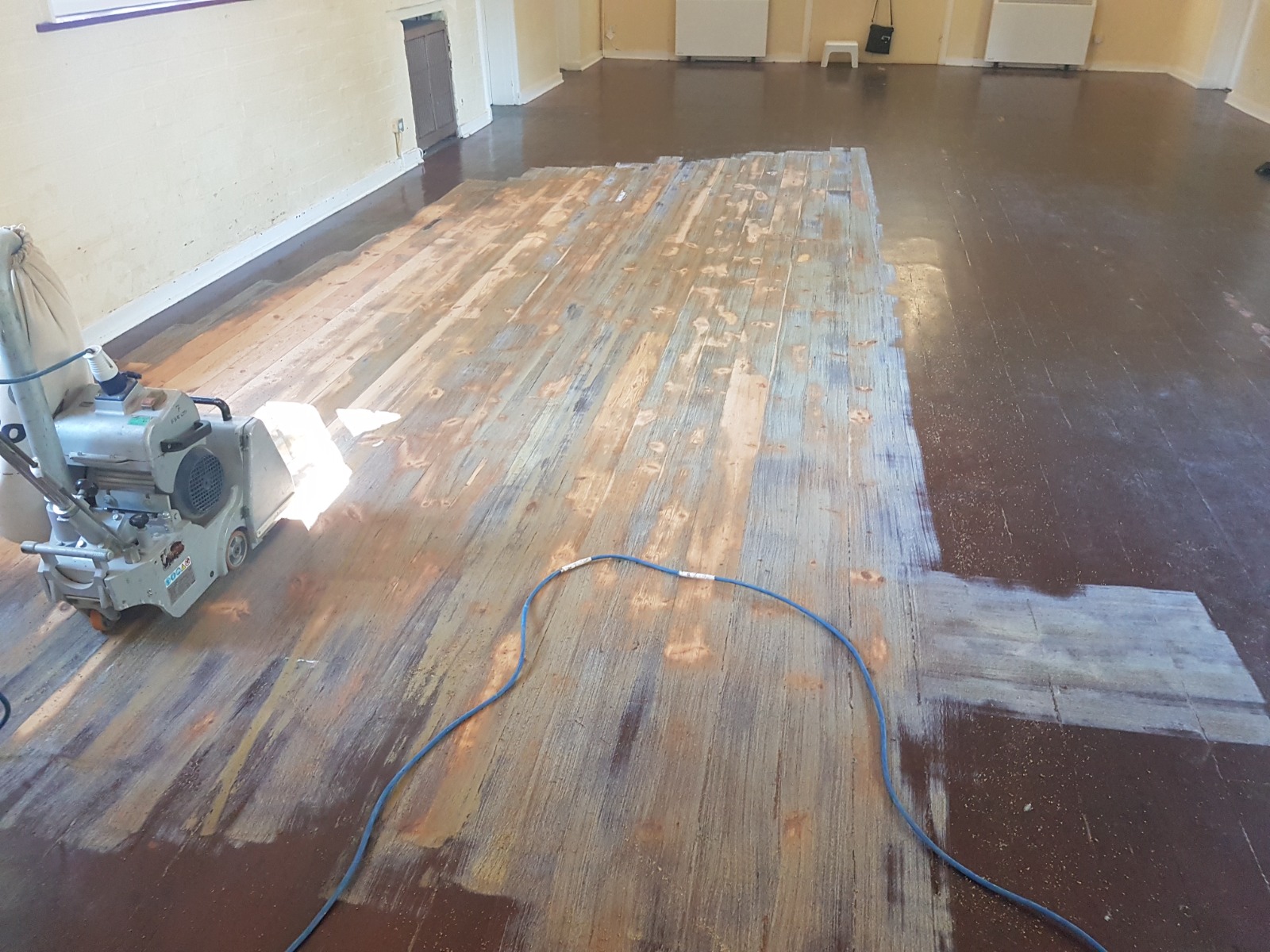
A Lägler Hummel belt sander handles the main field where there is enough timber to sand, with edging and detail machines for perimeters and thresholds. We use properly maintained extraction with HEPA H14 filtration at the fine-clean stage and select M- or H-class dust-control equipment to suit the wood-dust task. Containment, vacuum cleaning and a final abrasion check matter before coating; “dust-free” should never be taken literally on an occupied site.
4. High-traffic finishes: 2K lacquer, hardwax oil and slip control
For busy shops, office circulation routes and hospitality floors, a specified 2K waterborne polyurethane lacquer is often appropriate: its cross-linking catalyst gives better chemical and abrasion resistance than a basic single-pack coating. The mixed product has a pot life, so each coat is prepared and applied within the manufacturer’s window. Hardwax oil can suit repairable, lower-traffic heritage areas, but it requires a different cleaning and refresh routine.
We choose sheen and any compatible anti-slip system against how the floor will actually be used, especially at entrances and food-service points. A published coating claim alone does not certify an installed floor: where a measured slip outcome is required, arrange an in-situ wet and dry pendulum assessment under BS EN 16165:2021 Annex C, the successor to BS 7976-2, and agree the target with the dutyholder. Low-emission adhesive options carrying GEV EMICODE EC1 Plus can be specified for occupied interiors where compatible with the repair.
5. Aftercare and maintenance protocols
We leave a written handover covering the approved cleaner, dilution, dry-soil removal, entrance matting and inspection points. Avoid steam mops, standing water and generic shine-restorer products unless the finish manufacturer expressly approves them. A planned clean and screen-and-recoat before the wear reaches bare wood usually causes less disruption than another full sand.
Working around your opening hours
We agree deliveries, loading access, noise limits, fire exits and isolation zones with the facilities manager before work starts. The shift plan includes coat intervals, ventilation and a protected route around the work; an overnight application is not an automatic promise of a fully cured floor by breakfast. Light foot traffic, furniture, castors and wet cleaning each have different return-to-use times, set by the chosen manufacturer’s data sheet and site conditions.
| Working shift | Operational benefit | Suitable facilities |
|---|---|---|
| Overnight | Contains noise and access restrictions outside customer hours; reopening depends on the finish schedule. | High-street boutiques, cafés, clinics and staffed reception areas. |
| Weekend phased | Provides longer drying windows and time for a Monday handover where the product permits. | Private offices, coworking spaces, schools and treatment rooms. |
| Sectional | Keeps agreed routes in use while isolated bays are repaired and coated in sequence. | Hotels, event venues, showrooms, workshops and distribution premises. |
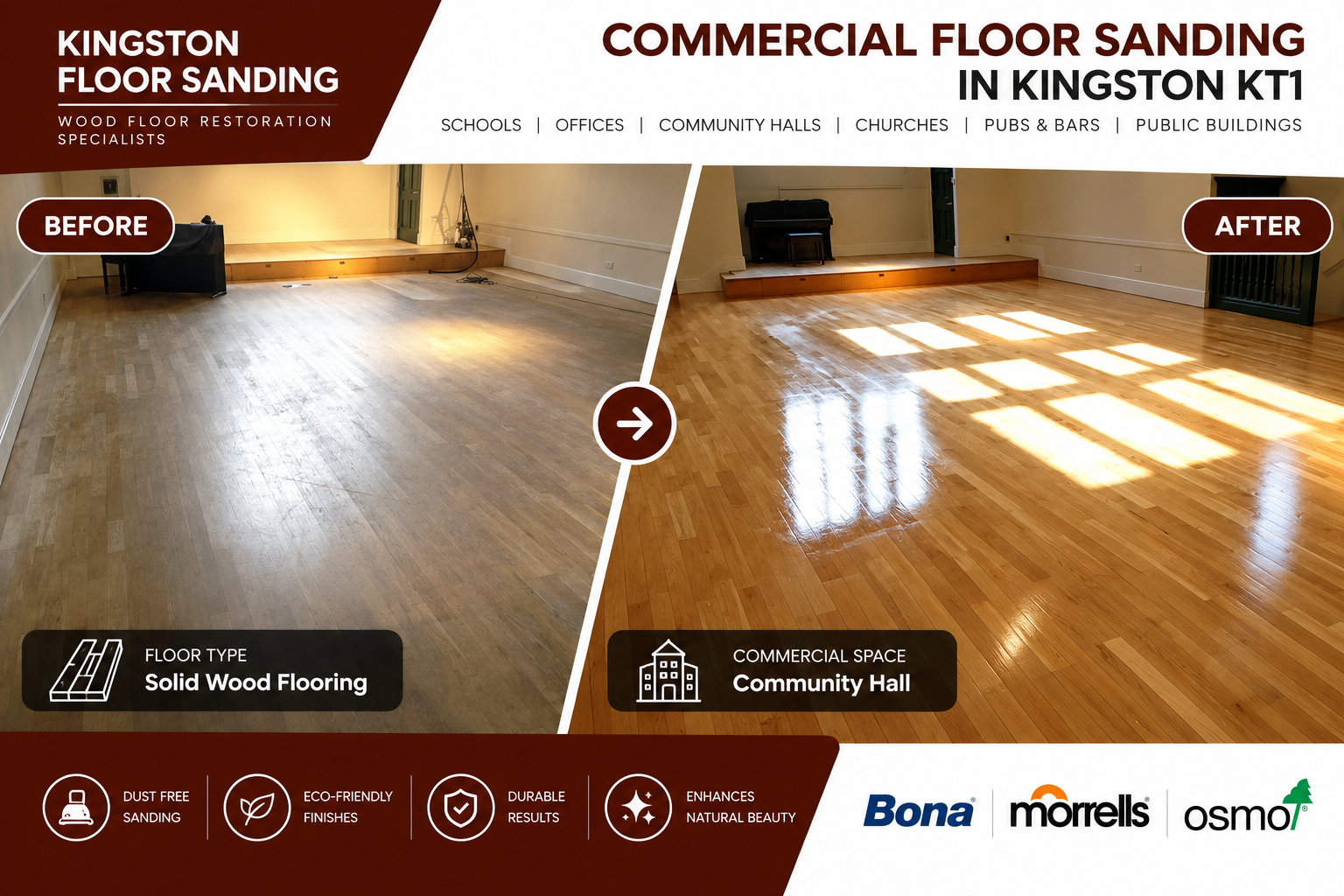
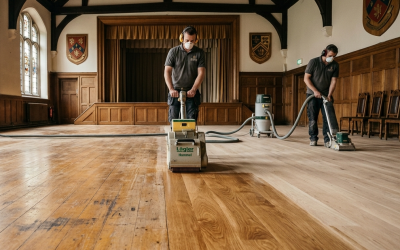
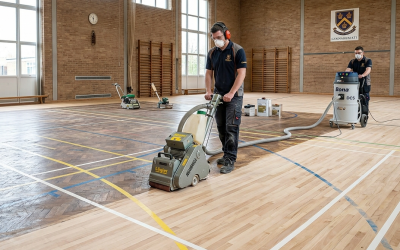
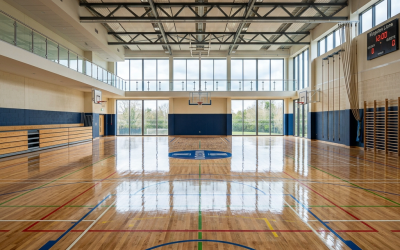
Before and after commercial floor sanding in a Kingston KT1 community hall, restoring a tired solid wood floor to a brighter, smooth and polished finish.
A quote that the site team can work with
Send photos or a short video first and we can flag obvious repairs, access constraints and likely finish options. A physical survey then confirms quantities, moisture condition, test patches, working hours and the areas that must stay open. The written scope should separate sanding, timber repairs, coating, protection and any out-of-hours charges; see the prices page for a starting point and the gallery for examples of finished work.
For managed sites, ask us to include project RAMS, COSHH assessments for wood dust and coatings, commercial liability insurance details and CSCS card evidence for assigned operatives where the principal contractor requires it. We agree permits, segregation and sign-off with your facilities or centre-management team before the machines arrive.