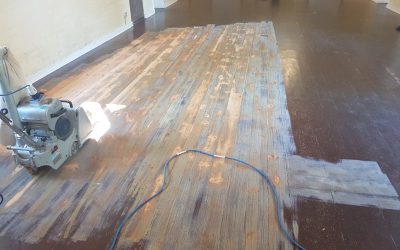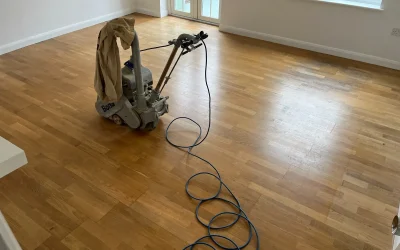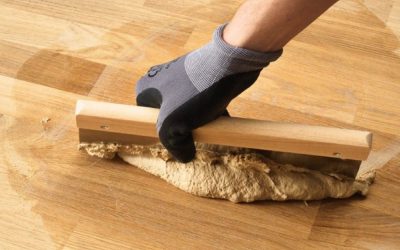
School floor sanding in Kingston, KT1
School floor sanding in Kingston, KT1 is not simply a matter of removing scratches and putting fresh lacquer on old timber. In busy classrooms, assembly halls, nurseries and corridors, worn seals allow cleaning moisture, grit and spilled drinks into the grain. Once the protective coating breaks down, the floor becomes harder to keep hygienic, timber joints begin collecting dirt, and smooth, polished patches can present a slip risk.
Kingston’s educational buildings range from Victorian conversions near Kingston town centre to Edwardian institutional blocks, post-war classrooms and modern teaching facilities. Each presents different problems, particularly where original pitch pine boards, oak parquet or older hardwood flooring have survived several decades of alterations. Our approach to School Floor Restoration in Kingston starts with identifying the timber, assessing its remaining serviceable thickness and establishing how the building needs to operate during the work.
Whether your premises require complete sanding or planned School Floor maintenance in Kingston, the specification must suit the actual footfall, cleaning regime and available closure period. We also assess whether School Floor Refinishing in Kingston can be completed without removing sound timber unnecessarily. For school premises managers, academy trusts and independent education providers, the priority is a durable, cleanable surface with a practical programme for reopening.
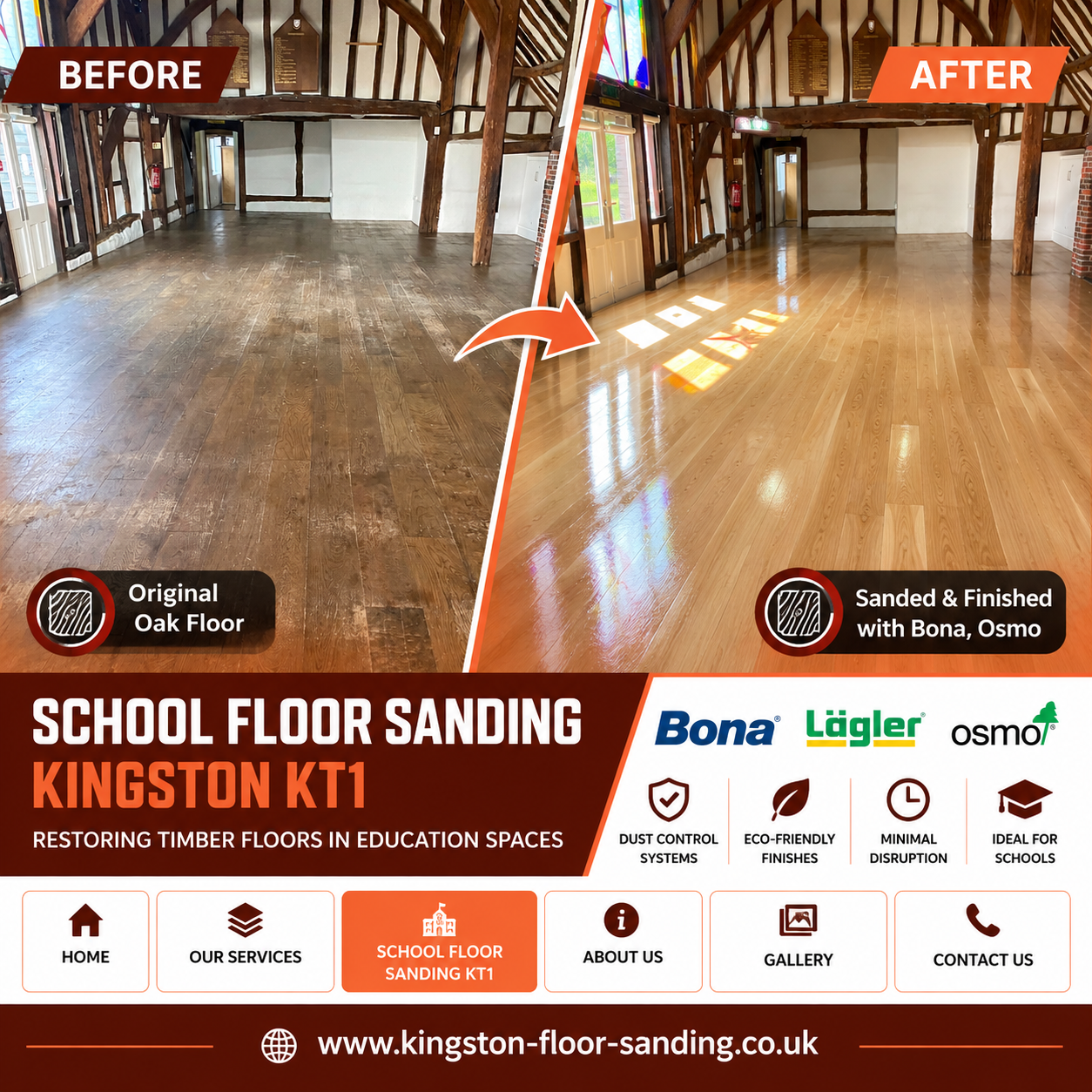
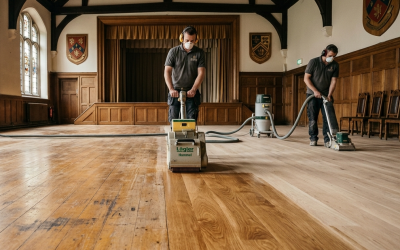
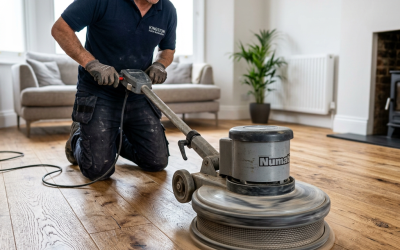
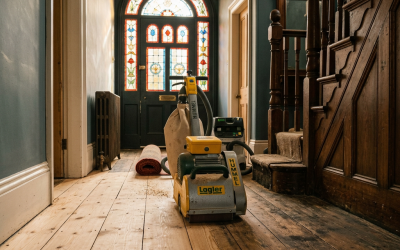
School floor sanding in Kingston KT1 — see the transformation of a worn oak timber floor into a clean, beautifully restored finish using professional Bona and Osmo products and Lägler sanding equipment. Kingston Floor Sanding specialises in restoring timber floors in schools and educational spaces.
Timber Floor Restoration for Kingston Schools and Education Facilities
A school floor has a considerably harder working life than most domestic timber floors. Hundreds of shoes carry abrasive grit across corridors, chair legs scrape classroom boards, and wheeled equipment wears through lacquer around doorways and storage areas. Regular disinfection and damp cleaning can accelerate coating failure where water is repeatedly allowed to enter exposed timber joints.
We assess timber flooring across nurseries, preschools, Montessori schools, primary and secondary schools, independent schools, academies and special educational needs facilities. The same practical considerations apply to boarding schools, international schools, sixth-form colleges, tuition centres, language schools and adult learning premises.
Kingston’s colleges, university teaching facilities, music schools, dance studios, art departments, training centres and after-school clubs often have additional requirements. These may include concentrated furniture loads, acoustic considerations, frequent room changes or a finish compatible with specialist cleaning procedures. We account for those demands before recommending a sanding and coating system.
Local Building Conditions Around Kingston, KT1
In older buildings around Kingston Market Place, Eden Street, Fairfield and the approaches to Kingston Hill, it is not unusual to encounter suspended timber floors, altered ventilation routes and mixed flooring materials. Victorian and Edwardian educational buildings may have original boards laid over timber joists, while later extensions can introduce concrete subfloors and different moisture conditions.
Restricted access, protected architectural details and narrow service entrances can complicate work near Kingston’s historic town centre and conservation areas. We assess machine access, extraction routes, fire exits and the movement of materials before establishing the programme. Older timber deserves careful investigation; aggressive sanding can shorten its remaining life considerably.
Why School Floors Need Commercial Restoration, Not Domestic Polishing
Domestic floor polish is not designed to correct a failing school floor. It can temporarily improve the appearance while leaving worn lacquer, loose parquet blocks and contaminated joints untouched. Silicone-containing maintenance products and wax residues may also interfere with adhesion when the floor is eventually recoated.
Before specifying repairs, we look for the following defects:
- Open board joints: Gaps retain crumbs, dust and cleaning residues, making routine hygiene more difficult.
- Loose parquet blocks: Failed adhesive allows movement under concentrated foot traffic and wheeled furniture.
- Worn protective seals: Exposed timber absorbs moisture, staining and soil more readily than an intact lacquered surface.
- Uneven thresholds: Raised boards, proud parquet edges and damaged transitions increase the risk of trips.
- Slip-resistance concerns: Polishing residues, inappropriate coatings and wet cleaning can reduce available traction.
- Moisture ingress: Persistently damp timber may distort, cup or develop adhesive failure.
- Previous over-sanding: Older tongue-and-groove flooring may have insufficient wear layer remaining for another heavy sanding cycle.
These are maintenance and safety issues, not merely cosmetic defects. A sound repair normally lasts longer than attempting to conceal movement beneath another coat of varnish.
Our Step-by-Step School Floor Sanding and Restoration Process
Step 1: Subfloor Audit and Moisture Testing
Every proper specification starts with the substrate. We inspect timber stability, existing finishes, loose boards, fixing positions, previous repairs and the condition of the perimeter joints. Where the floor covers a concrete base, relative humidity checks using an appropriate flooring hygrometer help establish whether excess moisture could compromise adhesive or coating performance.
On suspended timber floors, we consider timber moisture readings, underfloor ventilation and signs of historic water penetration. Quartersawn oak, pitch pine and teak behave differently during sanding and finishing, so species identification matters. Teak’s natural extractives, for example, can affect coating adhesion and demand specific preparation.
Engineered flooring is checked for wear-layer thickness before sanding is approved. Where a timber floor is too thin, damp or structurally unstable, sanding is not presented as the solution.
Step 2: Timber Repairs, Re-bonding and Resin Gap-Filling
Loose boards are secured before the sanding machines come out. Damaged parquet blocks are lifted where necessary, old adhesive residues are removed, and suitable replacement timber is fitted to match the original dimensions and laying pattern. On appropriate substrates, silane-based flexible parquet adhesives provide a resilient bond while accommodating limited natural timber movement.
For narrow, stable gaps, resin-slurry filling using compatible binder and clean sanding dust can produce a neat, level joint. Wide seasonal gaps are a different matter: packing them with resin alone often leads to cracking when the boards move. Where suitable, properly fitted timber slivers or individual board repairs give a more reliable result.
We also inspect thresholds, stair nosings, door clearances and the junctions between timber and adjacent floor coverings. Those details frequently require more attention than the middle of a classroom.
Step 3: HEPA Dust-Controlled Sanding and Surface Preparation
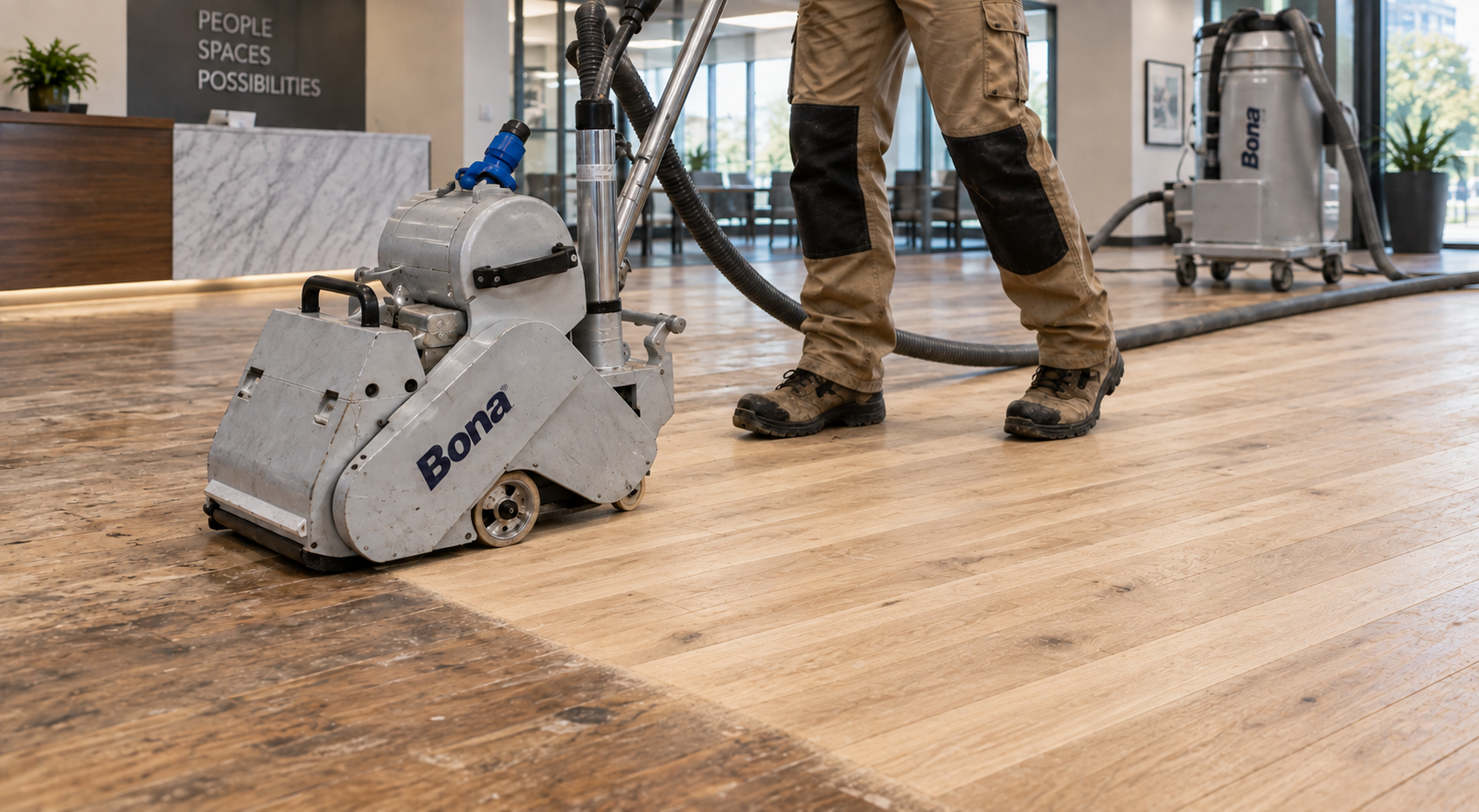
For substantial timber areas, a Lägler Hummel belt sander provides controlled removal of tired coatings and surface damage. Edge sanding, corners and areas around fixed cabinetry require smaller machines and careful hand finishing. Abrasive grades are selected according to timber condition, moving through progressive cuts rather than taking excessive material off in one pass.
Dust management is essential in occupied educational buildings. Where specified, HEPA H14-rated extraction equipment is used alongside sealed work zones, controlled machine connections and suitable final vacuum cleaning. Dust-controlled sanding greatly reduces airborne contamination, but it should never be described as completely dust-free.
Before finishing, the surface is checked for sanding scratches, adhesive contamination, residue and open joints. Poor preparation at this stage can produce visible defects or premature coating failure, regardless of the quality of the lacquer.
Step 4: High-Traffic Lacquers, Hardwax Oils and Anti-Slip Finishes
For heavily used classrooms and circulation areas, a professional two-component waterborne polyurethane lacquer is often the practical choice. These 2K coatings use a separately added cross-linking hardener to develop chemical and abrasion resistance. The components must be mixed at the manufacturer’s specified ratio and applied within their stated pot life.
Bona Traffic HD Anti-slip is one example of a commercial coating system worth evaluating where increased traction is required. The final specification depends on the intended use, cleaning conditions, substrate and supporting slip-test data. A product labelled anti-slip is not, by itself, proof that the completed floor meets the site’s risk assessment.
For selected timber areas where localised repair and a traditional appearance are priorities, Osmo Polyx-Oil provides a hardwax-oil alternative. It can be appropriate for certain teaching rooms, specialist spaces and heritage interiors, although its maintenance requirements differ from those of a two-component lacquer. Oil and wax systems should not be substituted casually for a specified sealed sports or high-traffic floor.
Slip Resistance and UK Safety Standards
Where slip resistance forms part of the school’s specification, we consider pendulum testing to BS EN 16165:2021, Annex C. This superseded the older BS 7976-2 pendulum method still referenced in some maintenance documents. Measurements should reflect the relevant dry or wet conditions and the footwear or barefoot use expected in that area.
For many pedestrian environments, a Pendulum Test Value of 36 or above is commonly used as an indication of low slip potential, but the result must be interpreted against the site’s actual hazards. A laboratory classification does not replace on-site testing where that is required by the client, insurer or risk assessment.
Low-emission products are also considered where internal air quality matters. EMICODE EC1 Plus is a very-low-emission classification applicable to certified products; it should not be confused with a blanket guarantee that every lacquer or adhesive has the same rating. Product-specific safety data, emission certification and ventilation requirements are checked during specification.
Step 5: Aftercare and Planned Floor Maintenance
The first cleaning operation after restoration is particularly important. Newly coated floors must not be wet-mopped or loaded with heavy furniture before the selected system permits it. Chair feet, trolley wheels and entrance matting should also be checked before pupils return.
A sensible school maintenance routine includes daily grit removal, correctly diluted pH-neutral cleaning products compatible with the finish, prompt spill removal and periodic inspections of high-wear areas. Avoid excessive water, uncontrolled steam cleaning and concentrated chemicals that the coating manufacturer has not approved.
Where the existing lacquer remains sound, a professional clean, abrasion and maintenance recoat may be possible without a full resand. This is particularly useful for schools managing expenditure across several buildings and academic years.
School Holiday, Overnight and Weekend Sanding in Kingston
School floor restoration has to fit the timetable, not the other way round. Term dates, breakfast clubs, examinations, parent evenings, holiday childcare, cleaning teams and safeguarding arrangements can all affect access. A practical programme identifies which rooms can be released, when noisy operations are permitted and when coatings can safely cure.
We discuss delivery access, electrical supply, extraction equipment, ventilation, secure storage and designated waste routes before work begins. Fire escape corridors must remain available unless an alternative arrangement has been properly authorised. Where other contractors are present, working areas and handover responsibilities need to be clearly separated.
| Working Shift | Operational Benefits | Suitable Facilities |
|---|---|---|
| Overnight | Allows agreed sanding and preparation outside teaching hours; coating and curing must still be scheduled around safe reopening. | College classrooms, administration areas, training facilities and selected corridors. |
| Weekend Phased | Provides a longer uninterrupted work window and greater flexibility for isolating areas and managing finish drying. | Primary schools, nurseries, tuition centres, independent schools and academies. |
| Sectional | Keeps unaffected rooms in service while separate zones are repaired and refinished in an agreed sequence. | Large educational campuses, universities, secondary schools and multi-building sites. |
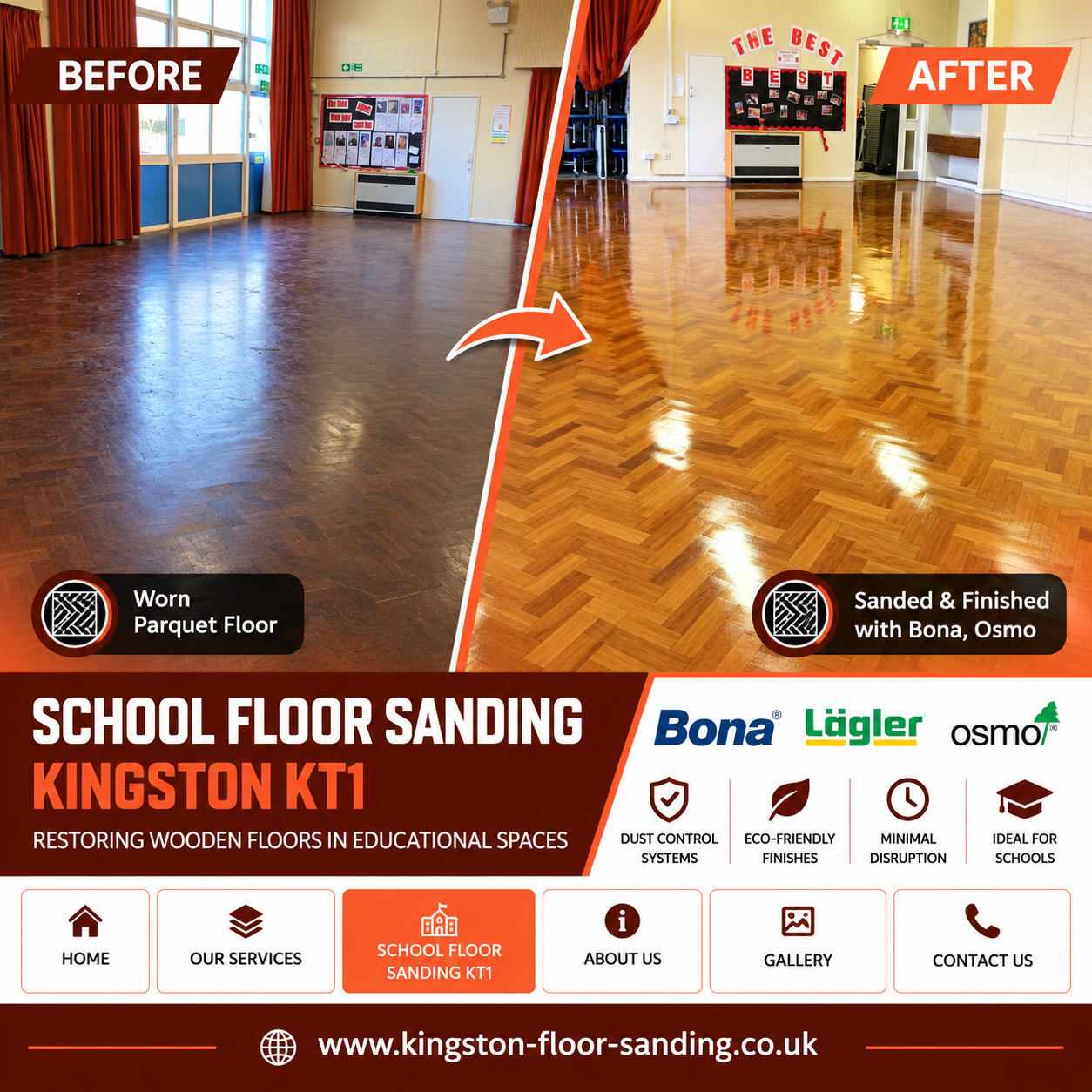
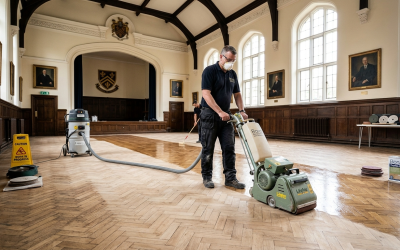
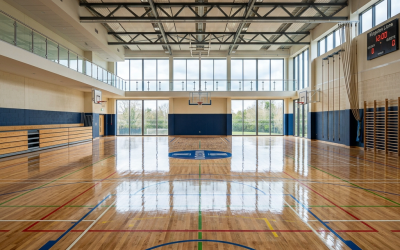
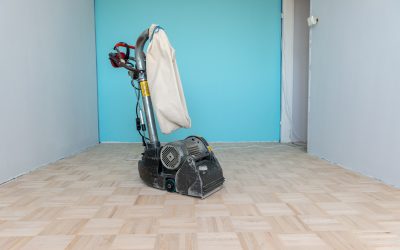
School parquet floor sanding in Kingston KT1. See how professional sanding and finishing restores the natural warmth and shine of a school hall’s herringbone timber floor. Kingston Floor Sanding uses professional Lägler sanding equipment and Bona and Osmo finishing products to revitalise wooden floors in educational and commercial spaces.
Drying Times, Full Cure and Reopening the Building
Dry-to-touch, light-foot-traffic and full chemical cure are three different stages. Some fast-curing commercial waterborne systems permit controlled foot traffic within hours and full traffic from around 12 hours under specified conditions. That does not mean every finish is suitable for immediate wet cleaning, furniture movement or covering with protective sheeting.
Temperature, relative humidity, ventilation, coat thickness and the manufacturer’s technical data all affect the programme. Hardwax oils often require different drying and curing arrangements, especially where airflow is limited. We build the reopening plan around the selected product and site conditions rather than promising that every school floor can be handed back overnight.
For larger halls and corridors, phased sanding over a half-term or summer closure is often more economical than repeated short visits. It reduces mobilisation costs and gives sufficient time for structural repairs, finishing and final inspection.
Health, Safety and Safeguarding on Educational Sites
Working in a school demands more than wearing safety boots and putting warning signs on the doors. The method must address pupils, teaching staff, site personnel, visitors and other contractors, including those who may arrive unexpectedly during out-of-hours work.
Before mobilisation, the contract documentation should establish:
- RAMS: Site-specific Risk Assessments and Method Statements covering sanding machinery, electrical equipment, manual handling, access and emergency procedures.
- COSHH: Assessments for lacquers, hardeners, adhesives, cleaning chemicals and relevant hazardous dust exposure.
- Dust control: Suitable extraction, respiratory protection where required, containment and safe disposal arrangements.
- Safeguarding: School-approved access, supervision and appropriate DBS or barred-list checks where the role and legal eligibility require them.
- Fire precautions: Controlled storage of chemicals, safe handling of oil-contaminated cloths and unobstructed emergency exits.
- Reoccupation: Confirmed ventilation, adequate curing, removal of equipment and safe access before the work area is handed back.
Oil-soaked application cloths deserve particular attention because certain drying oils can generate heat as they oxidise. They must be managed according to the product’s safety instructions, not left in an ordinary rubbish bag overnight.
On contracts requiring CSCS-carded operatives, commercial public liability cover and supporting insurance documentation, these requirements should be checked and agreed before appointment. The quote should also establish whether independent slip testing, fire-performance evidence or additional site supervision is required.
School Assembly Halls, Classrooms, Parquet and Sports Flooring
Different rooms demand different finishes and repair methods. An oak parquet assembly hall may need extensive block re-bonding and a durable clear lacquer, while old pitch pine classroom boards can require careful fixing and restrained sanding to preserve their remaining thickness.
Assembly Halls and Performance Spaces
Large halls expose every sanding defect, particularly in strong daylight or under stage lighting. Flatness, consistent abrasive progression and careful coating application are essential. Where the floor is used for dance or sport, the finish must also suit the intended activity rather than simply achieving a high-gloss appearance.
Nurseries and Early Years Classrooms
Nursery floors experience frequent spills, floor-level activities, cleaning and furniture movement. Smooth, sound joints and a finish that tolerates the agreed hygiene routine are important. Particular attention is given to accessible corners, exposed splinters and transitions between timber, matting and resilient flooring.
School Gyms and Indoor Sports Areas
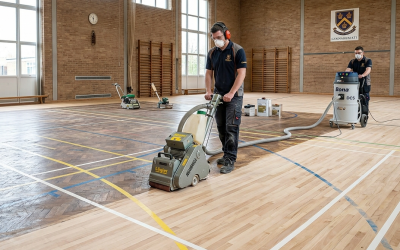
Dedicated indoor sports floors may require an EN 14904-compliant system, depending on the floor construction and the activities undertaken. Sports line markings, traction, surface elasticity and the compatibility of any new lacquer with the existing coating need to be established before work. A conventional classroom lacquer should not automatically be specified for a sprung sports floor.
Music Rooms, Colleges and Specialist Teaching Areas
Music and performance rooms often contain heavy instruments, fixed seating and specialist acoustic details. Colleges and technical training premises may have wheeled equipment or furniture loads that concentrate wear on relatively small areas. These conditions affect both the repair specification and the choice of protective finish.
School Floor Sanding Costs in Kingston, KT1
The cost of restoring a school timber floor depends on considerably more than its square metre area. A clear, sound parquet hall is normally more straightforward to programme than several classrooms with fixed furniture, failed adhesive and restricted access. Timber repairs, coating specification, night working and staged mobilisation must all be allowed for.
A proper commercial quotation should distinguish sanding and finishing from timber replacement, adhesive repairs, gap filling, furniture handling and any additional testing. It should also state the proposed number of coats, the agreed working window and the earliest permissible reopening conditions.
For further information, see our floor sanding prices. School and campus projects are best priced following an initial review of photographs or video and, where required, a physical site survey.
Review Timber Restoration Work Before Choosing a Contractor
A freshly polished photograph tells you very little about how the floor was repaired. For commercial projects, look closely at the edges, parquet joints, repaired boards, thresholds and consistency of the finish. These are the details that distinguish proper timber restoration from a quick cosmetic sand.
You can explore our floor sanding gallery for examples of timber floor finishes and restoration work. When discussing an educational project, ask specifically about comparable flooring types, the coating system and how the work was scheduled around building occupancy.
Quotations and Contractor Checks for Kingston Schools
School estates teams and facilities managers need a quotation they can assess properly, not a vague price for sanding and varnishing. We recommend starting with photographs or a short video showing the main floor areas, damaged joints, door thresholds and any visible movement. An approximate floor plan and proposed closure dates help establish the likely programme.
A physical site survey can then confirm the timber construction, repair requirements, moisture conditions, access restrictions and coating specification. Any proposed contractor’s CSCS credentials, commercial liability insurance, RAMS, COSHH information and safeguarding arrangements should be verified before works are authorised.
The written scope should distinguish essential repairs from optional improvements, with coating products, exclusions and anticipated access restrictions clearly recorded. This gives the school a basis for comparing quotations and avoids disputes when rooms have to reopen on a fixed date.
Frequently Asked Questions About School Floor Sanding in Kingston
Can school floors be sanded during half-term?
Yes, provided the available closure accommodates preparation, repairs, sanding, coating and the required drying or curing period. A hall with loose parquet may need longer than a sound timber classroom. The survey establishes whether half-term provides a realistic working window.
Is dust-controlled sanding safe for occupied schools?
Professional extraction and suitable containment significantly reduce dust migration, but sanding should take place in isolated work zones. Occupants must not be allowed through active sanding areas. The RAMS should cover dust control, ventilation, access and final cleaning.
Can existing parquet be restored without replacement?
Often, yes. Where the blocks are sound and sufficient timber remains, loose sections can be re-bonded, damaged blocks replaced and the surface resanded. Persistent subfloor dampness or widespread structural failure must be resolved before restoration proceeds.
Do school floors need an anti-slip finish?
That depends on how the area is used and the outcome of the school’s slip-risk assessment. Corridors, entrances, stairs and areas exposed to moisture may require particular attention. Where testing is specified, the completed floor should be assessed against the appropriate BS EN 16165 pendulum method and agreed acceptance criteria.
How often should school timber floors be refinished?
There is no sensible fixed interval for every school. Footfall, chair protection, entrance matting, cleaning chemicals and the original coating system all affect wear. Periodic inspection and timely maintenance recoating can often postpone the need for another full sanding operation.
Can classrooms reopen the morning after lacquering?
Only when the selected coating’s technical data, site temperature, ventilation and actual curing conditions permit the intended use. Early light foot traffic is not the same as moving desks back or restarting wet cleaning. Reoccupation should follow a documented, product-specific handover plan.